Rare earth projects require gravity concentration equipment that can separate minerals with narrow density differences. Not all concentrating tables deliver equivalent performance for these difficult separations.
Here are the technical and operational factors that determine whether equipment will meet your project requirements.
Equipment Options
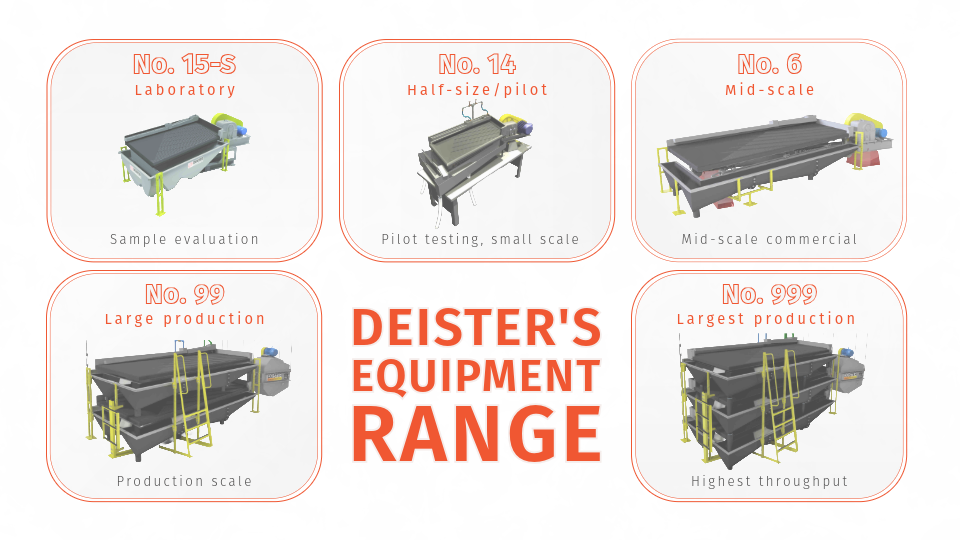
Deister manufactures diagonal-deck concentrating tables in multiple sizes to match different project stages and scales:
Laboratory and Pilot Scale:
- Model #15-S: Laboratory table for sample evaluation and testing
- Model #14: Half-size commercial unit suitable for pilot testing or small-scale operations
- Model #6: Mid-scale commercial table
Production Scale:
- Model #99: Large production table
- Model #999: Largest production table, available in triple-deck and quad-deck configuration
Table capacity varies significantly with particle size. For fine material in the 100-325 mesh range typical of rare earth applications, expect approximately 0.4 tons per hour per deck. Coarser feeds process at higher rates, up to 2.0+ tons per hour per deck for material above 10 mesh.
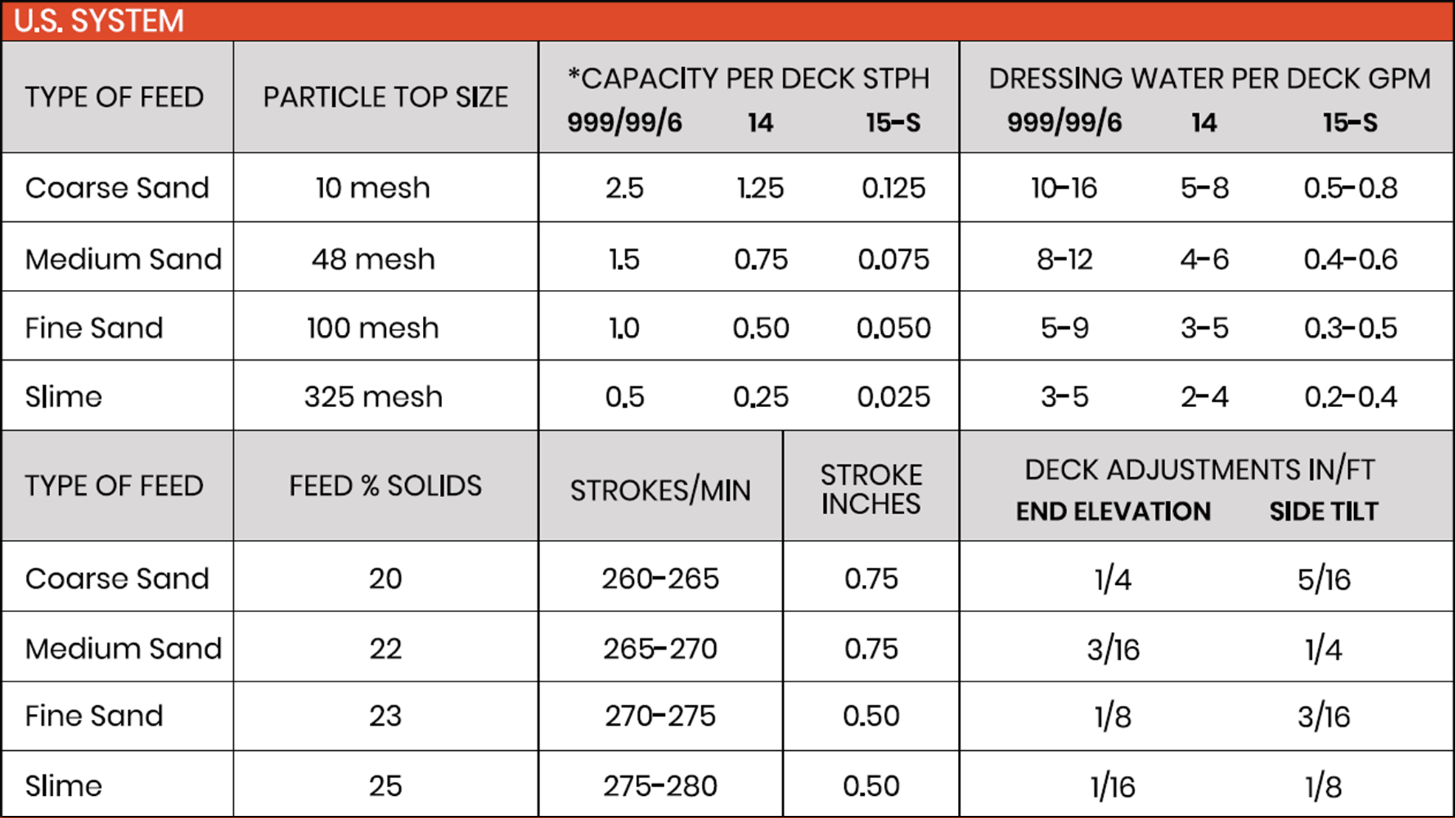
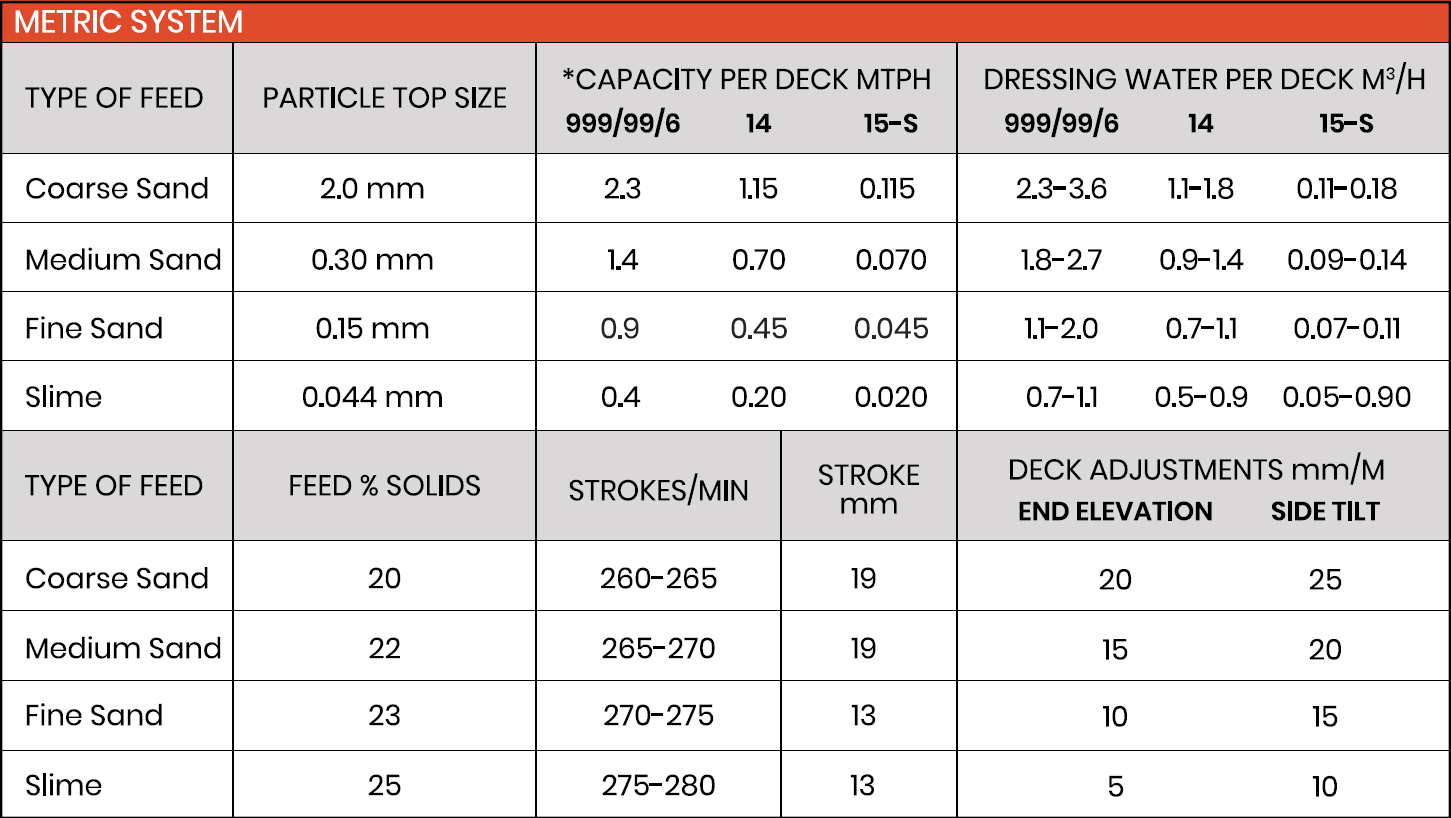
Equipment sizing must account for your actual particle size requirements and total throughput needs.
Information Needed for Evaluation
To discuss equipment selection for your project, you'll need:
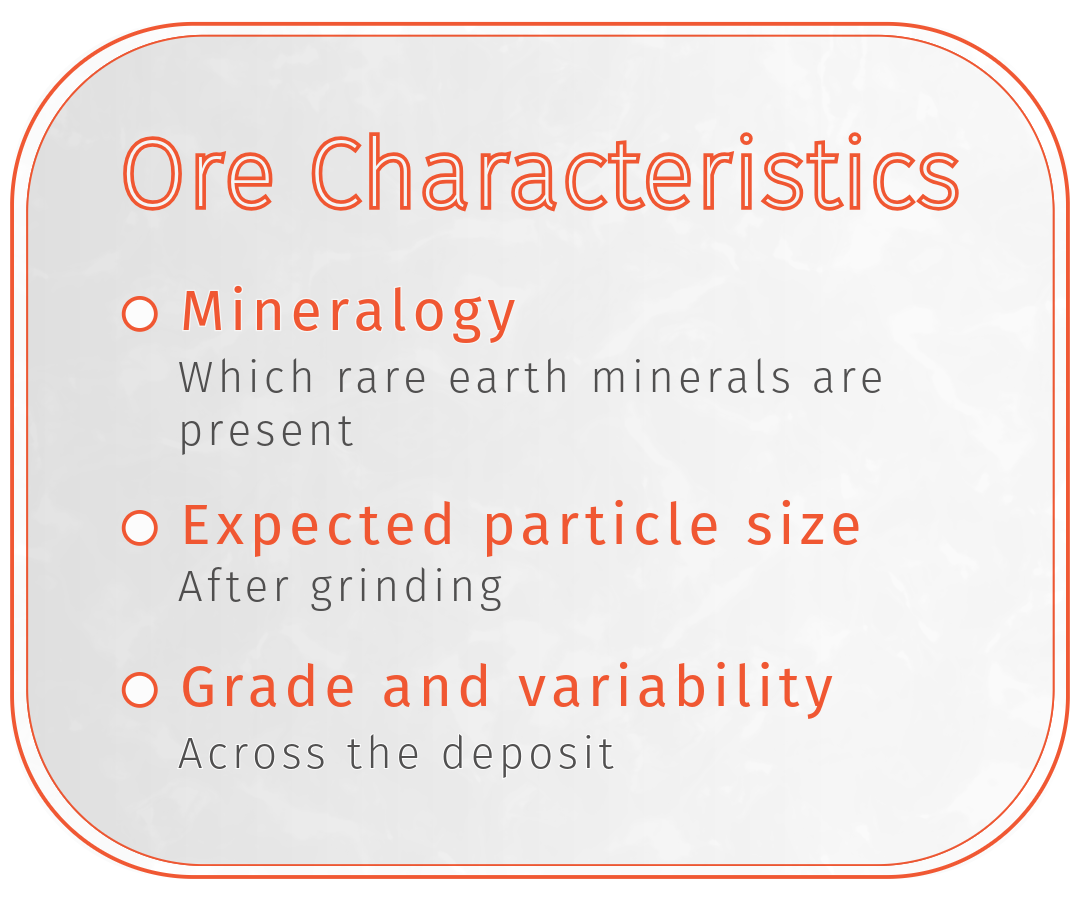
Ore characteristics:
- Mineralogy (which rare earth minerals are present)
- Expected particle size after grinding
- Grade and variability across the deposit
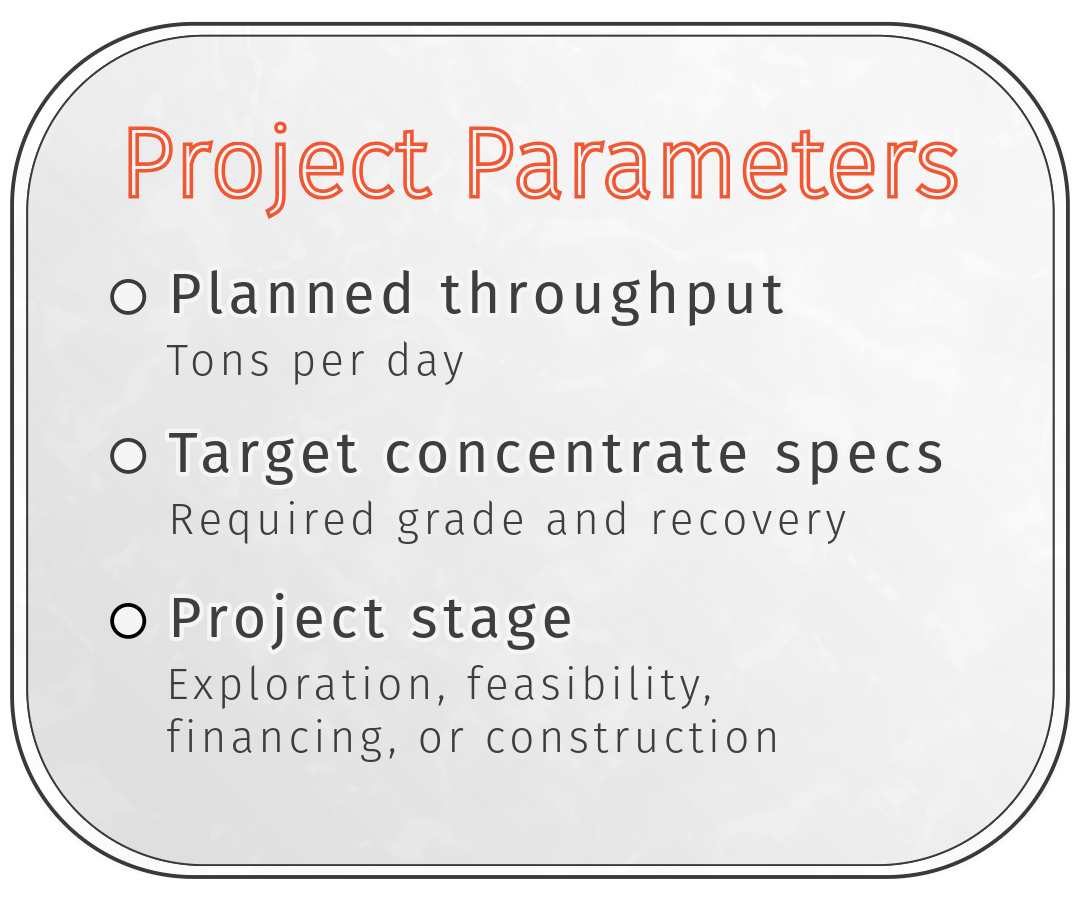
Project parameters:
- Planned throughput (tons per day)
- Target concentrate specifications
- Project stage (exploration, feasibility, financing, construction)
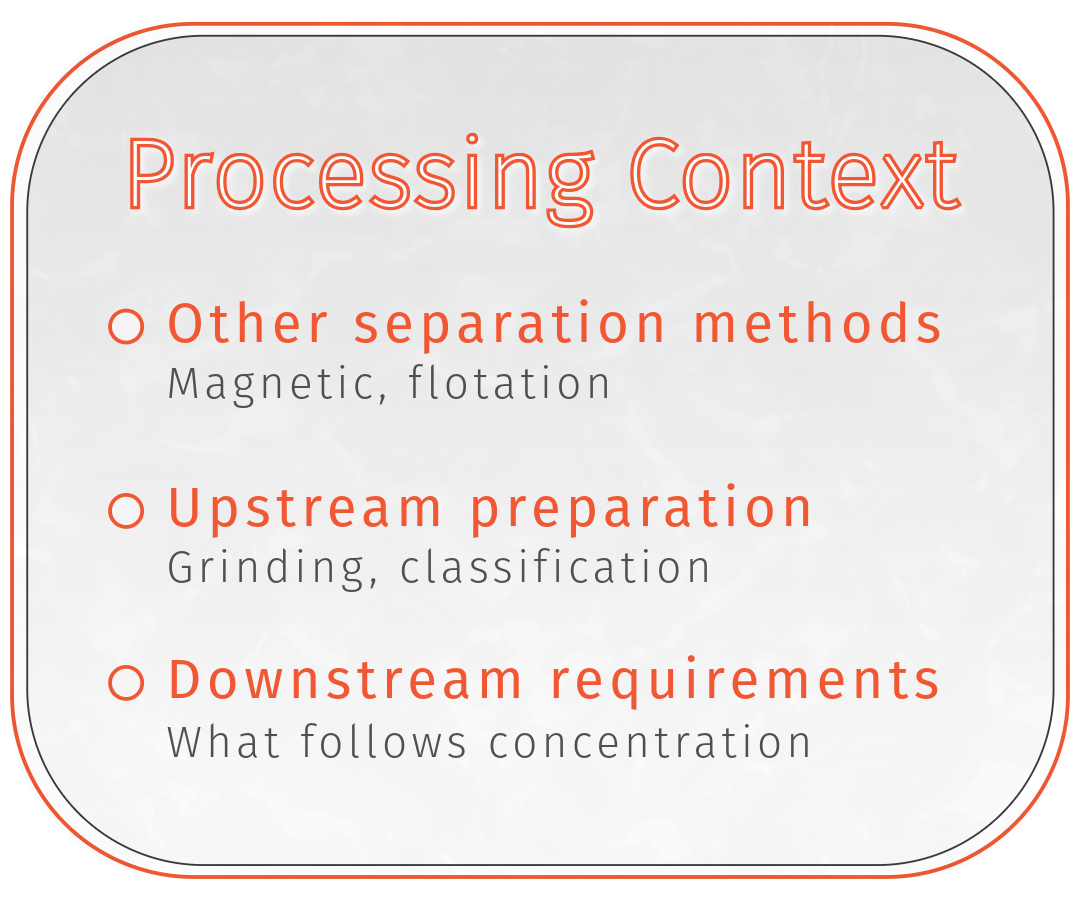
Processing context:
- Other separation methods being considered (magnetic, flotation)
- Upstream preparation (grinding, classification)
- Downstream processing requirements
Typical Project Progression
Early-Stage Evaluation
Initial discussions establish whether gravity concentration suits your ore characteristics and project scale. This includes reviewing mineralogy, understanding separation challenges, and determining which equipment scale makes sense.
Testing Phase
If warranted, laboratory testing with your ore samples establishes baseline performance, achievable recovery rates, concentrate grades, and optimal operating parameters. The Model #15-S provides laboratory-scale evaluation.
Pilot testing using the Model #14 validates that laboratory results translate to sustained operation and generates data for commercial plant design. This step is particularly valuable for projects advancing toward feasibility studies or financing.
Commercial Implementation
Commercial plant design considers equipment count based on throughput requirements, integration with upstream grinding and classification, positioning relative to magnetic separation or flotation, and layout for efficient operation and maintenance.
Deister provides engineering support throughout: equipment selection and sizing, flowsheet development, installation and commissioning assistance, and operator training.
Making the Decision
Equipment selection for rare earth physical beneficiation involves more than comparing capacity specifications. Consider:
- Commercial operating history with similar mineralogy
- Specific design features for narrow-density-range separations
- Equipment availability at appropriate scales (lab through production)
- Engineering support from evaluation through operation
- Service and parts availability
Deister's diagonal-deck tables combine over a century of concentrating table experience with specific design advantages for difficult separations, 75% more working riffle area in the intermediate gravity zone where monazite, zircon, and ilmenite separate.
For projects where physical beneficiation determines downstream processing requirements and project economics, equipment selection based on proven technology and comprehensive support reduces technical risk.
Discussing gravity concentration for your rare earth project?
Contact Deister to evaluate equipment options based on your ore characteristics and project requirements:
- Over a century of concentrating table manufacturing, decades of diagonal-deck operation in beach sands
- Diagonal-deck design providing 75% more working riffle area for difficult separations
- Multiple table sizes from laboratory scale (#15-S) through pilot (#6, #14) to large production units (#99, #999)
- Support from evaluation through implementation
Contact: sales@deisterconcentrator.com | 800-926-6453