Copper is the backbone of the scrap metal industry and one of the clearest applications for concentrating table technology.
Global demand for copper is rising, driven largely by electrification: grid transmission and distribution, EV wiring and motors, and wind and solar infrastructure. Primary copper supply is increasingly constrained by declining ore grades.
For scrap processors, the question is not whether copper in their feed is valuable. It clearly is. The question is whether they capture all of it and sell it at the price it deserves.
Application 1: Wire and Cable Granulate
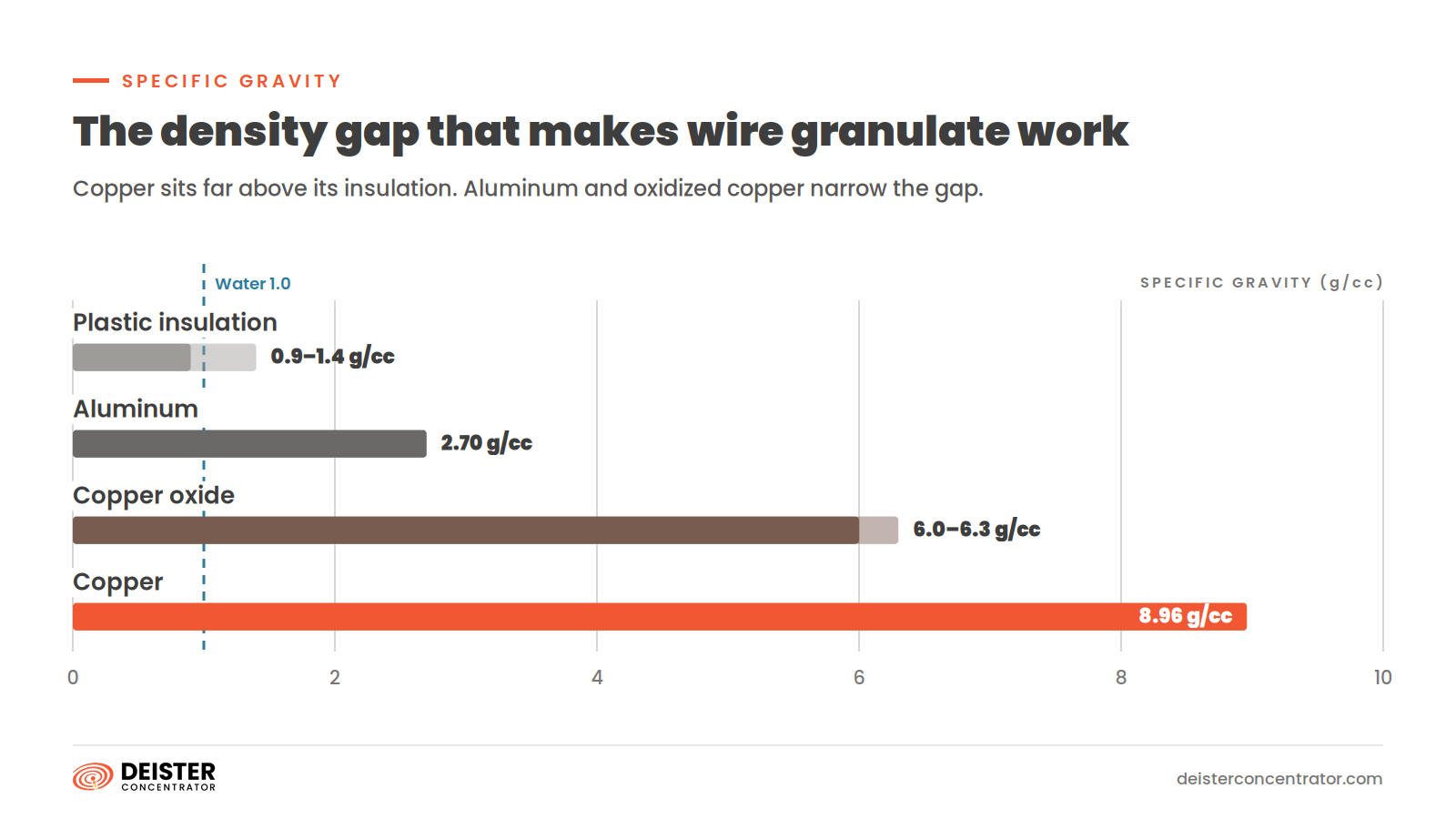
Wire granulate is the most straightforward and immediately profitable copper tabling application. The density difference between copper (8.96 g/cc) and plastic insulation (0.9–1.4 g/cc) is one of the largest in any processing application.
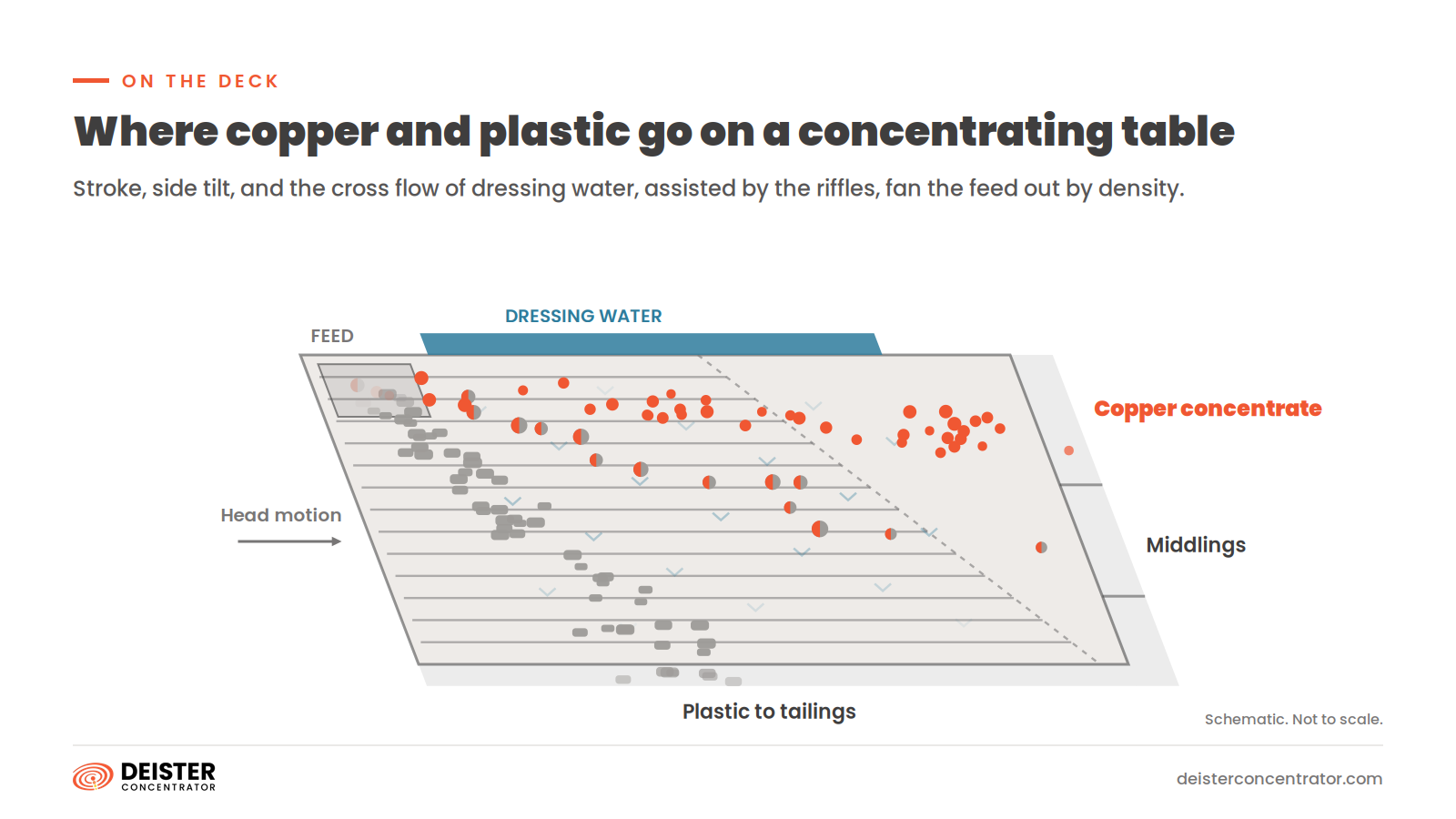
Tables produce a copper concentrate approaching the purity of clean No. 1 or No. 2 copper granules.
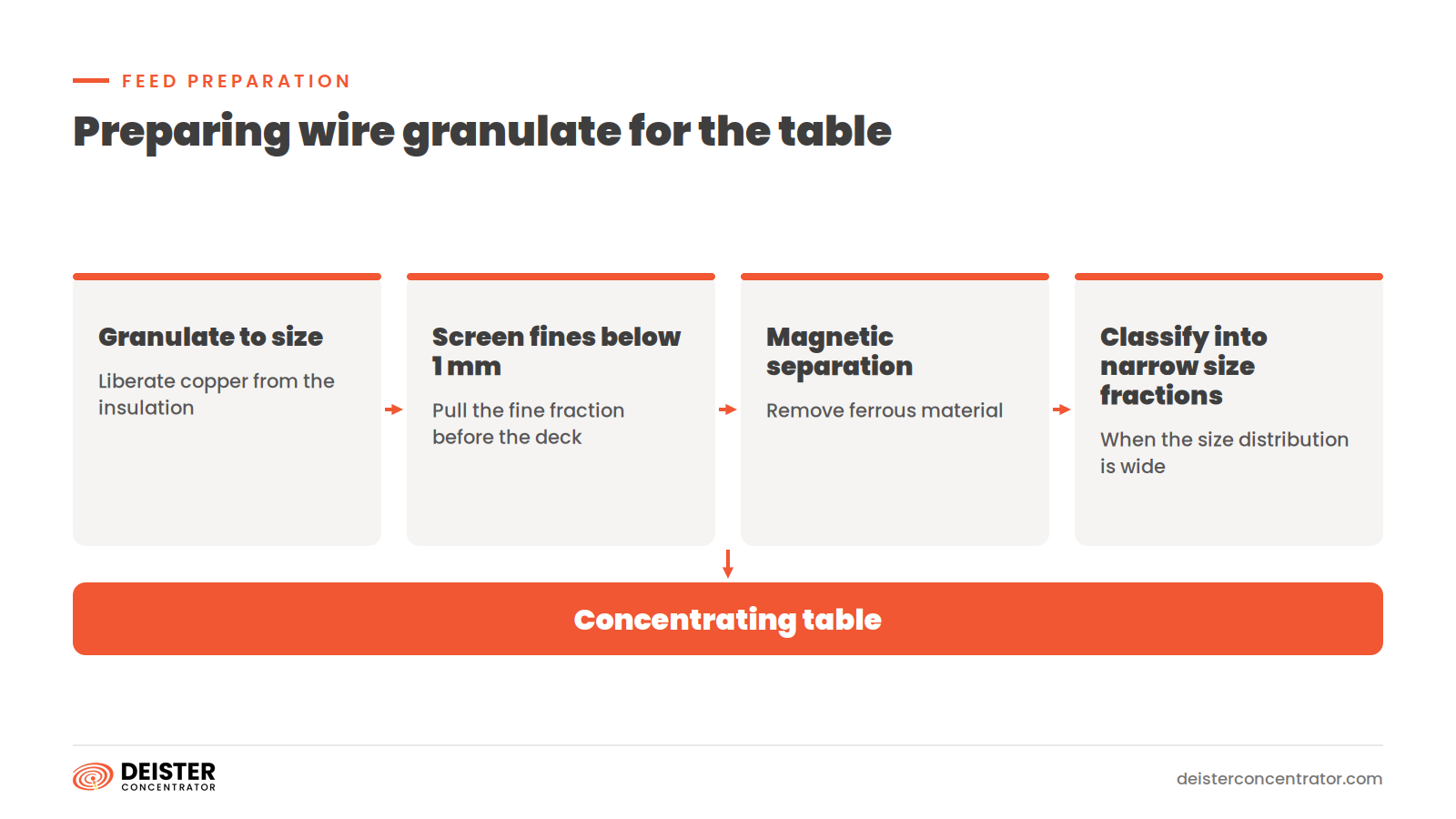
Feed preparation: granulate to size for tabling, screen fines below 1mm, apply magnetic separation, classify into narrow size fractions if distribution is wide.
Aluminum wire note: The density gap is smaller than for copper. Tables still perform well, but separation is less sharp. Confirm with a test run.
Application 2: E-Waste Copper
E-waste copper concentrated by tabling can approach the grade of clean copper scrap significantly better than unseparated e-waste material. See E-Waste Processing for full details.
When Copper Tabling Does Not Work Well
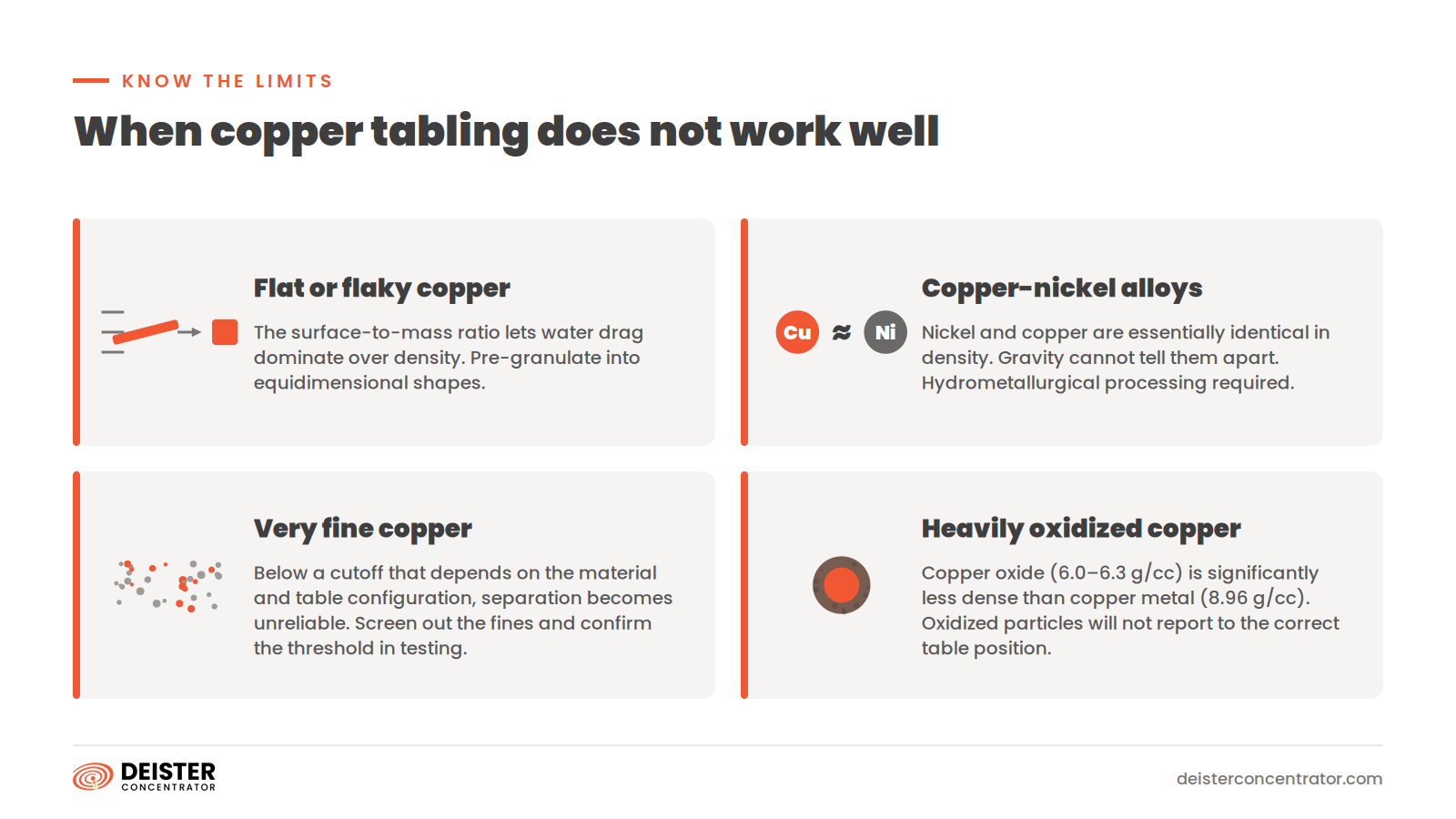
- Flat or flaky copper: Surface-to-mass ratio allows water drag to dominate over density. Pre-granulate into equidimensional shapes first.
- Copper-nickel alloys: Nickel and copper are essentially identical in density; gravity separation cannot distinguish them. Hydrometallurgical processing required.
- Very fine copper: below a cutoff that depends on the material and table configuration, gravity separation becomes unreliable. Screen out the fine fraction and handle it separately; confirm the threshold for your feed during testing.
- Heavily oxidized copper: Copper oxide (5.8–6.0 g/cc) is significantly less dense than copper metal. As a result, oxidized particles will not report to the correct table position.
Process Water for Copper
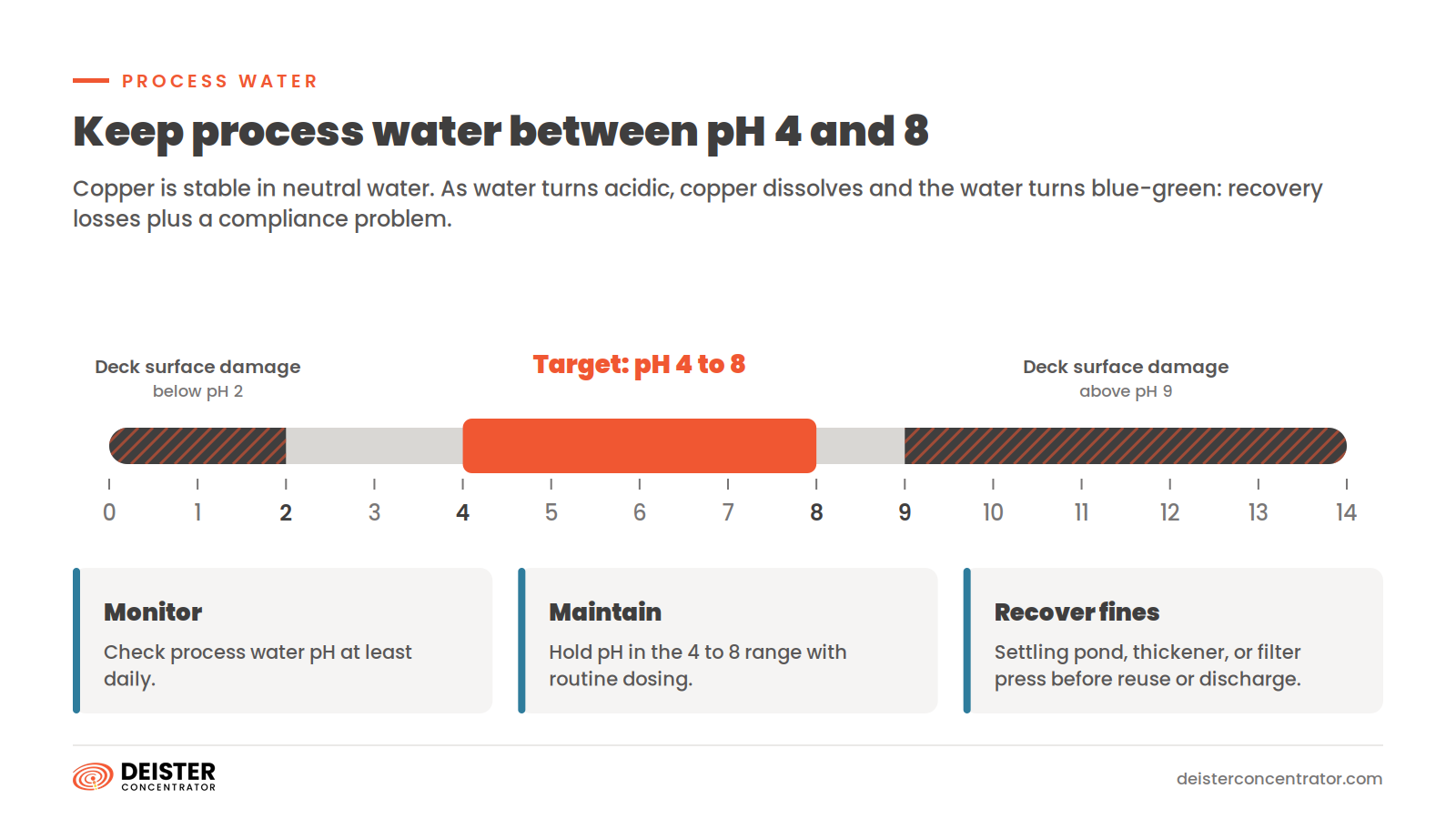
Copper is stable in neutral water. Problems arise when the process water becomes acidic; copper begins to dissolve, turning the water blue-green and creating both recovery losses and environmental compliance issues
- Monitor process water pH at least daily
- Maintain neutral pH (4 to 8)
- Plan for a settling pond, thickener, or filter press to recover fine solids, along with routine pH monitoring and dosing, before water is reused or discharged.
Testing the Limits
The financial case for copper tabling is a price premium argument. Clean copper is consistently and significantly worth more than mixed copper-bearing material.
Grade of copper product achievable, recovery rate, recommended table configuration: all of this comes from the test, not from estimates. Test turnaround is 6-8 weeks.
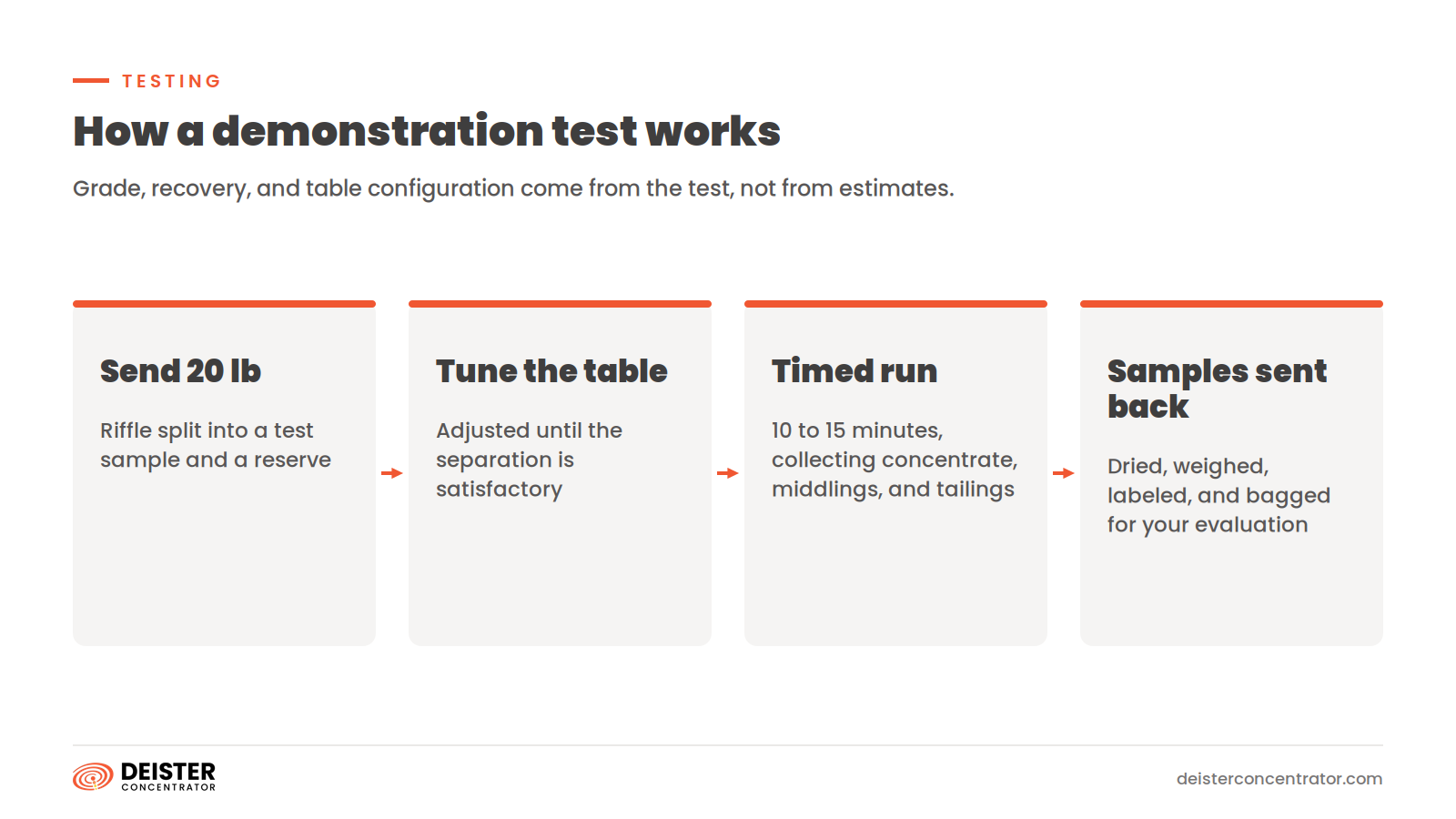
Send us your material, and we will run the test.
Comparing table options? See our suspended tables and floor-mounted tables, or check spare parts for the table you already have.