Recovering Precious and Base Metals from Electronic Scrap
Electronic waste is one of the richest sources of recoverable metals in the modern waste stream.
Modern electronic devices contain gold, silver, palladium, copper, tin, and cobalt at concentrations that become commercially attractive at scale.
The challenge is not finding value in e-waste. The challenge is getting it out efficiently. Concentrating tables address that challenge directly.
Why Gravity Separation Works for E-Waste
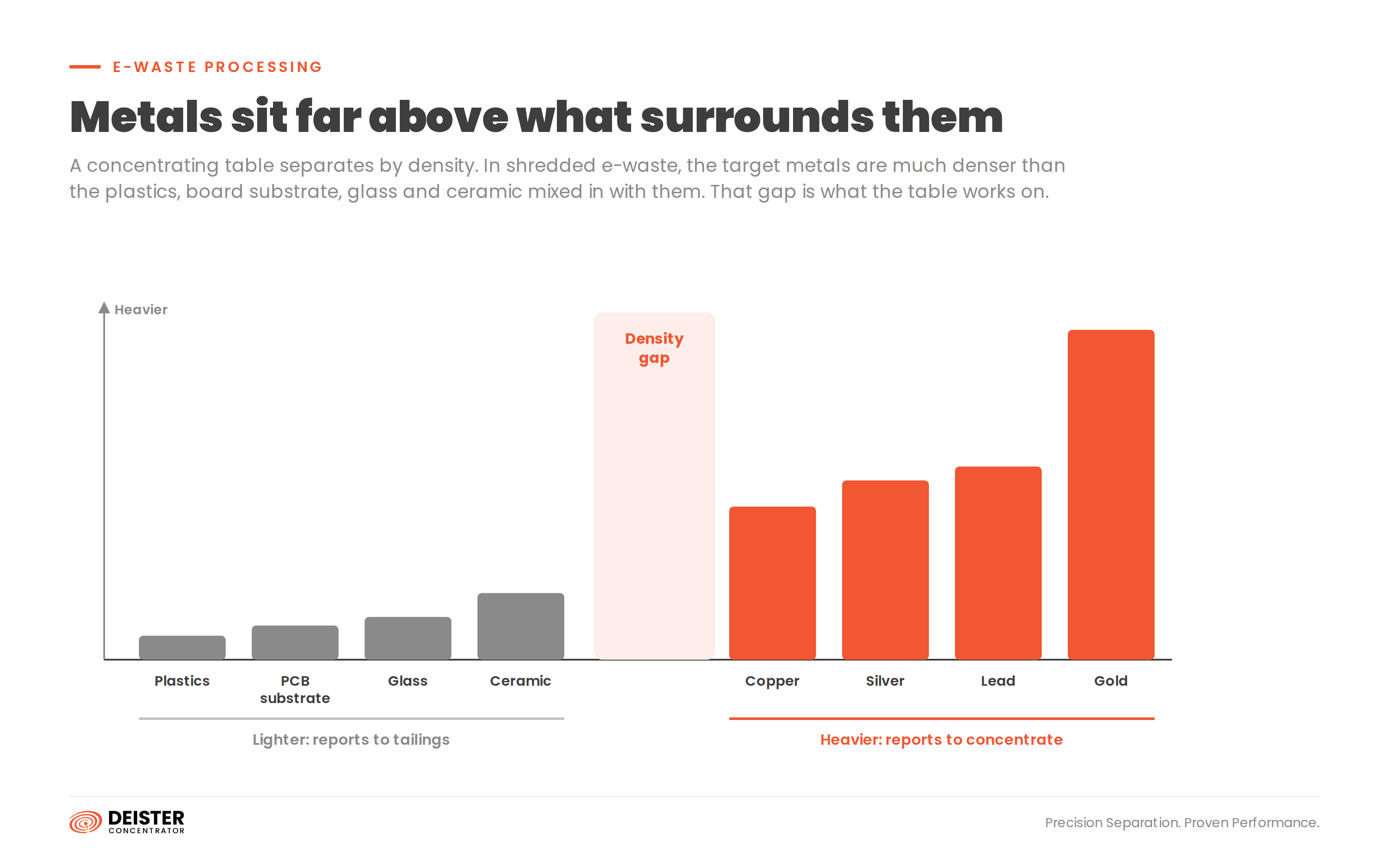
Tables work well for e-waste because the density differences between target metals and surrounding non-metallic material are large and consistent.
Key densities in shredded e-waste:
Metals (heavy, report to concentrate):
- Gold: 19.3 g/cc pure, lower for alloys depending on purity
- Silver: 10.49 g/cc
- Copper: 8.96 g/cc
- Lead: 11.3 g/cc
Non-metallic fractions (light, report to tailings):
- Most plastics: 0.9–1.4 g/cc
- PCB substrate (FR4): 1.8–2.0 g/cc
- Glass: 2.5 g/cc
- Ceramic: 2.3–3.9 g/cc
The significant density difference between metals and many non-metallic fractions creates favorable conditions for gravity separation.
Key E-Waste Streams
Wire and Cable Granulate
Wire and cable granulate must be properly prepared before gravity separation. Upstream granulation and separation processes can produce a feed suitable for table concentration.
Printed Circuit Boards (PCBs)
PCB material can contain precious metals within complex particles rather than as liberated metal. A concentrating table separates particles by physical characteristics, producing a concentrated metal-bearing fraction rather than pure precious metals.
Mixed Consumer Electronics
Feed preparation is critical. Prepare and size materials appropriately for the intended separation and identify and remove hazardous materials such as batteries before handling or testing.
Materials Requiring Special Handling
Lithium-ion batteries: Identify lithium-ion batteries and other hazardous materials before handling or testing. Disclose hazardous materials to Deister before submitting material for testing.
Oversize material: Feed should be appropriately sized for the intended table application.
Process Water
E-waste process water will contain dissolved metals (lead, copper, zinc, tin) and cannot be discharged without treatment in most jurisdictions.
Practical requirements:
- Monitor process-water pH and maintain it between 4 and 8. Water above pH 9 or below pH 2 can damage the table deck surface.
- Use a settling pond, thickener, or filter press to recover fine solids
- Analyze process water periodically and treat as required
Test Before You Invest
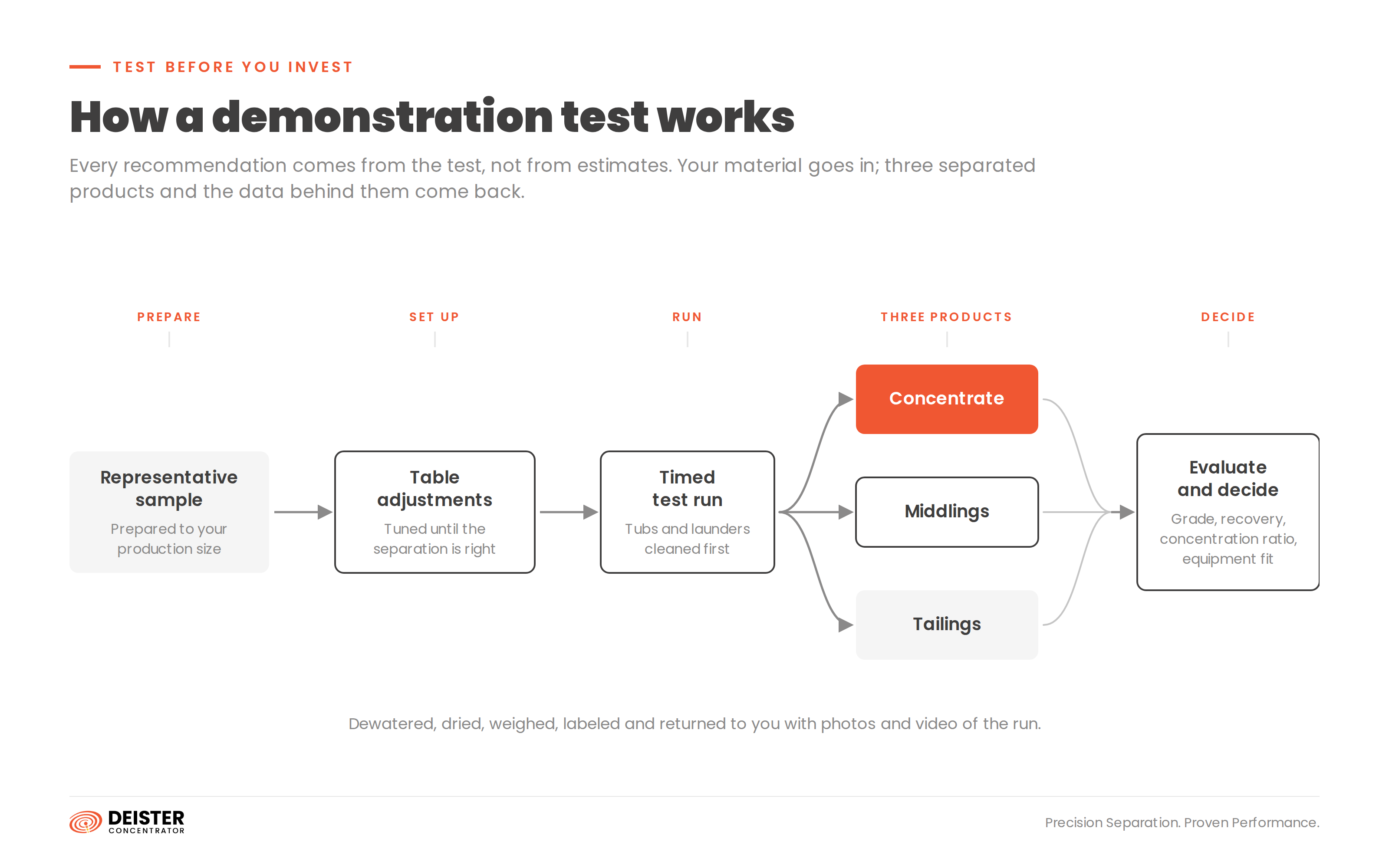
Before investing in a concentrating table, test it out.
At Deister Concentrator, we offer in-house testing for new applications. We ask for a sample of representative material prepared to the particle size you expect to run in production. Testing produces concentrate, middlings, and tailings for evaluation. Turnaround time is approximately 6–8 weeks.
Send us your material.
Let the results guide the decision, or find spare parts for the table you are already running.