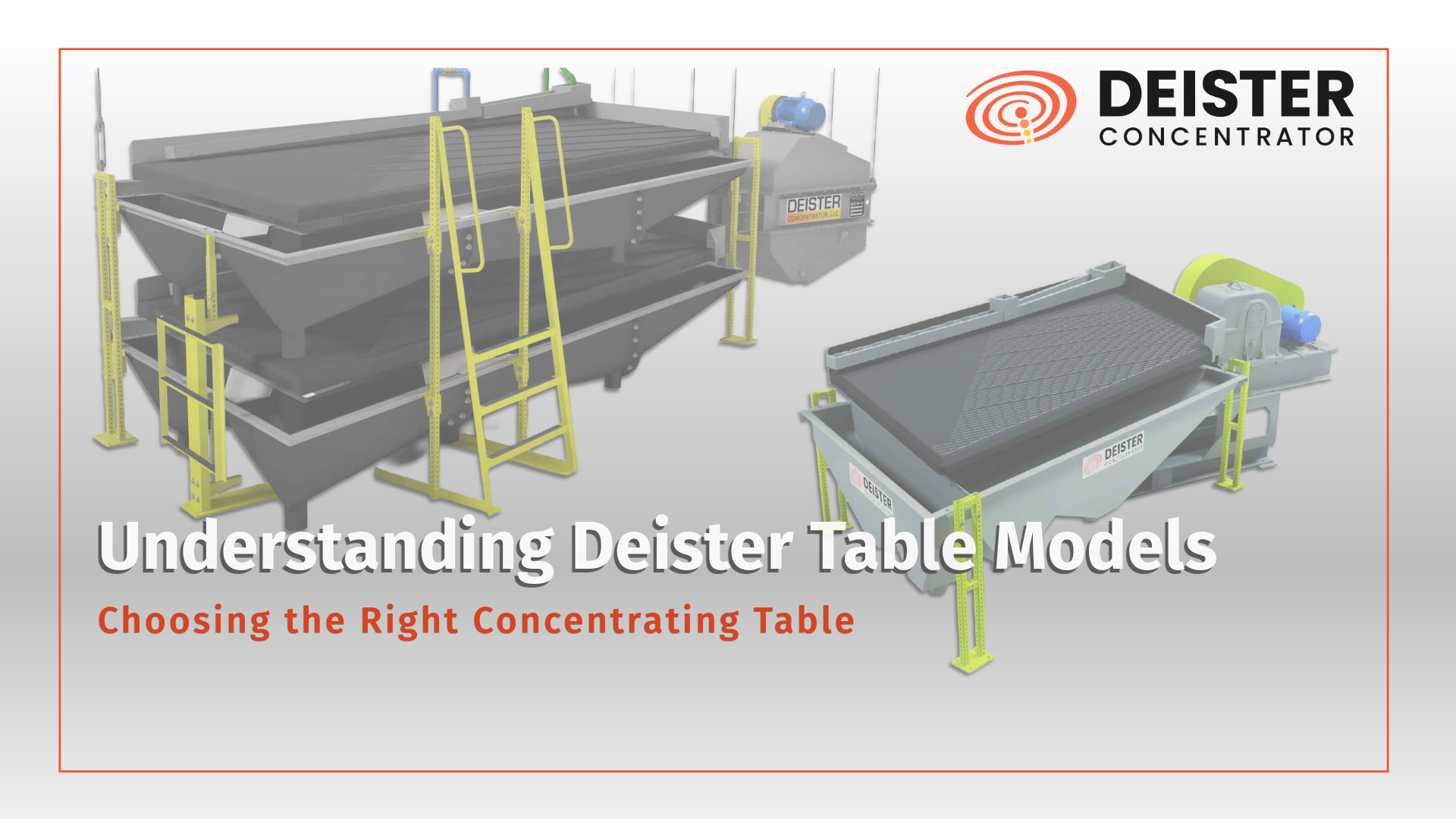
Deister concentrating tables are available in three primary configurations: the 999/99/6, the 14, and the 15-S. Each is designed for a different throughput requirement and application scale. Understanding the differences helps you select the right table for your operation from the start.
The Three Models at a Glance
| Model | Type | Relative Size | Best For |
|---|---|---|---|
| 999/99/6 | Suspended or floor-mounted | Large | High-throughput production operations |
| 14 | Suspended or floor-mounted | Medium | Mid-scale production and processing |
| 15-S | Suspended or floor-mounted | Small | Pilot testing, low-volume, or space-constrained applications |
Capacity by Feed Type (U.S. System — STPH per deck)
| Feed Type | Particle Top Size | 999/99/6 | 14 | 15-S |
|---|---|---|---|---|
| Coarse Sand | 10 mesh | 2.5 | 1.25 | 0.125 |
| Medium Sand | 48 mesh | 1.5 | 0.75 | 0.075 |
| Fine Sand | 100 mesh | 1.0 | 0.50 | 0.050 |
| Slime | 325 mesh | 0.5 | 0.25 | 0.025 |
Capacity for cleaner feeds is generally 50% less than for rougher feeds.
Capacity by Feed Type (Metric System — MTPH per deck)
| Feed Type | Particle Top Size | 999/99/6 | 14 | 15-S |
|---|---|---|---|---|
| Coarse Sand | 2.0 mm | 2.3 | 1.15 | 0.115 |
| Medium Sand | 0.30 mm | 1.4 | 0.70 | 0.070 |
| Fine Sand | 0.15 mm | 0.9 | 0.45 | 0.045 |
| Slime | 0.044 mm | 0.4 | 0.20 | 0.020 |
What the Capacity Figures Mean
Across all three models, capacity decreases as particle size decreases. This is consistent across every model. The 999/99/6 handles more tonnage than the 14, and the 14 handles more than the 15-S, but all three follow the same performance curve as feed gets finer.
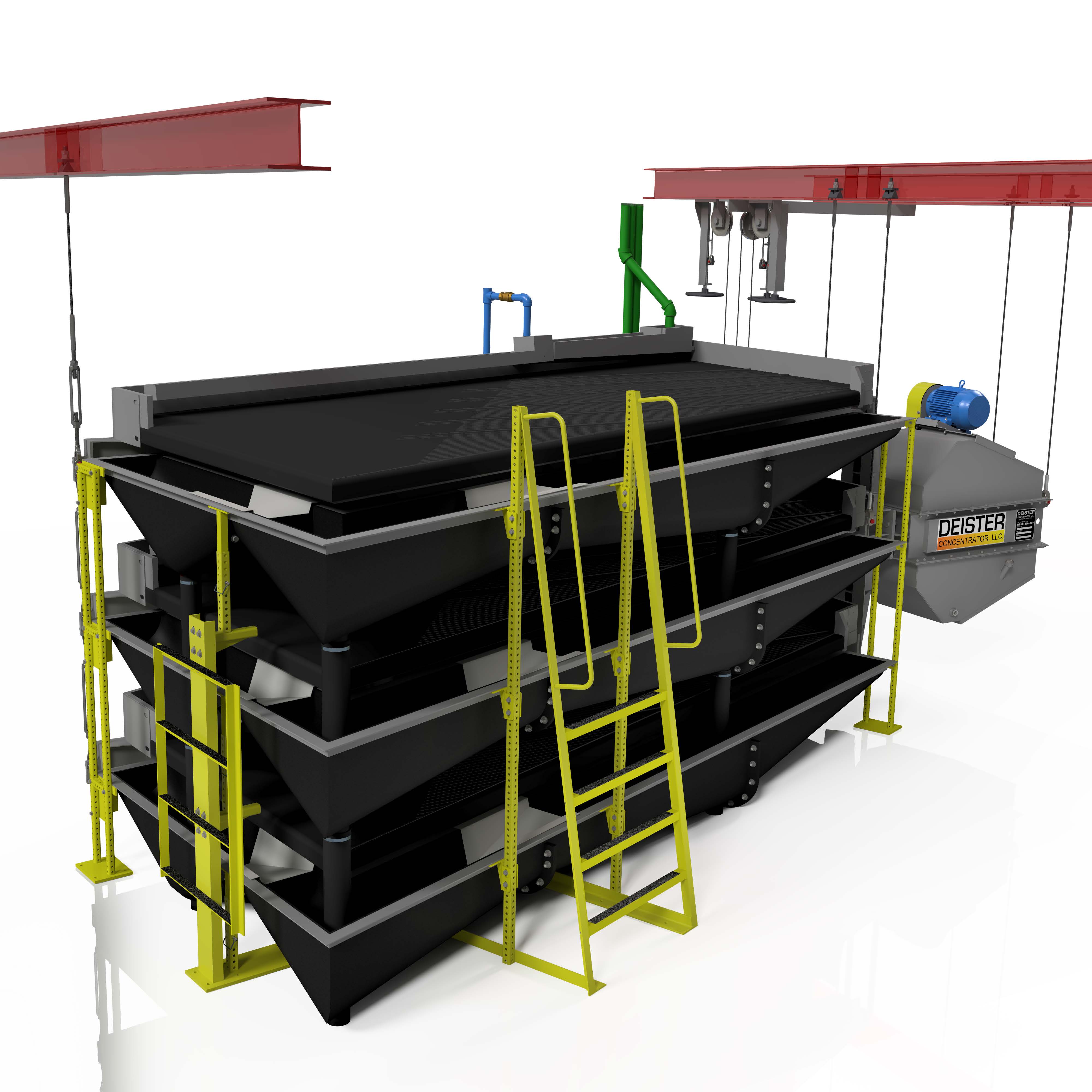
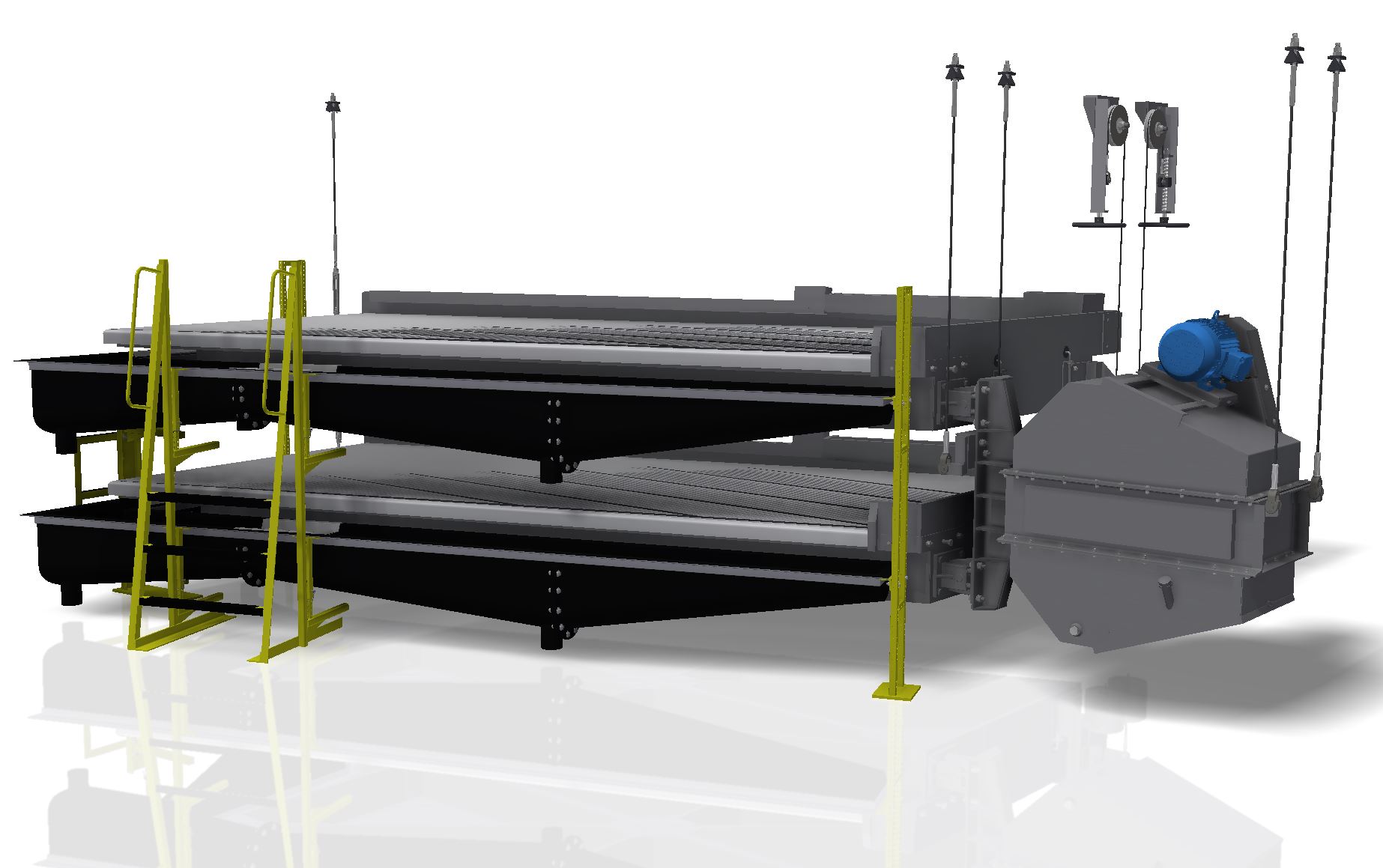
The 999/99/6 are the largest and highest-capacity models, and therefore the standard choice for production-scale mineral processing and metal scrap operations processing significant daily tonnage.
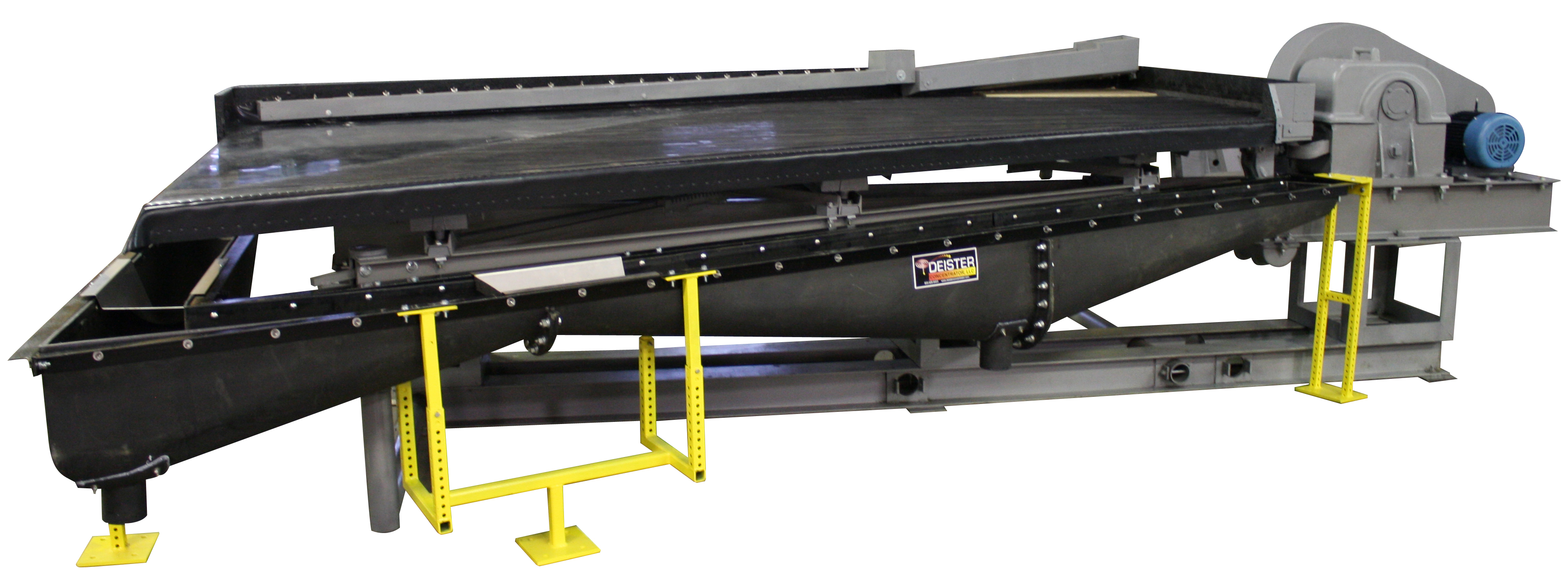
The 14 is a mid-size model suited to moderate throughput requirements. It follows the same separation principles as the 999/99/6 at roughly half the capacity per deck.
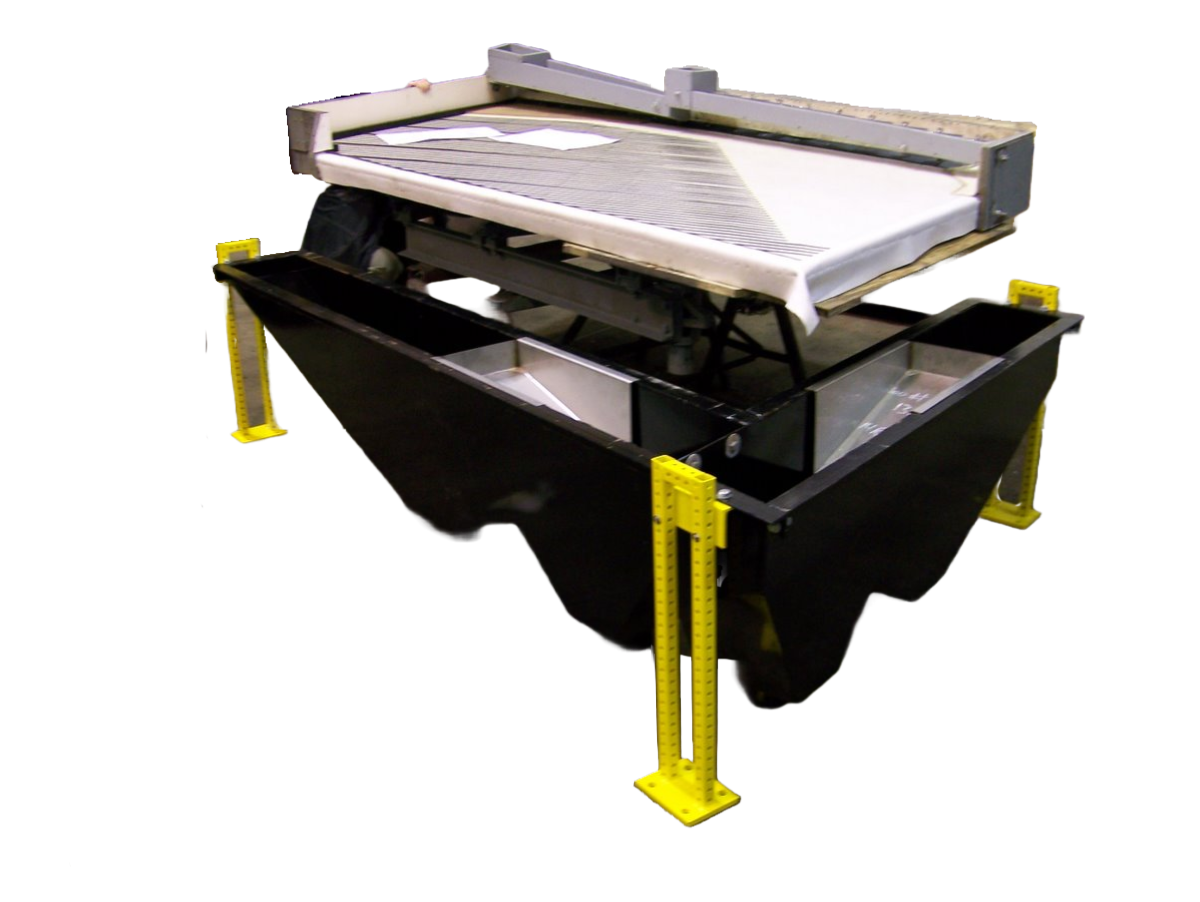
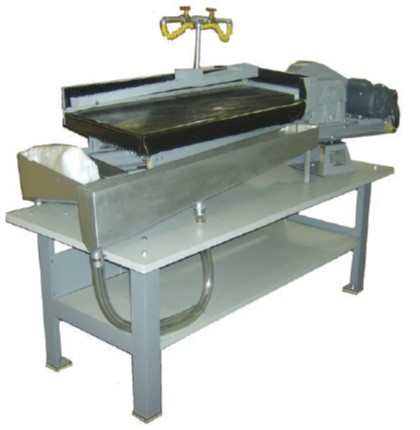
The 15-S is the smallest model — roughly one-twentieth the capacity of the 999/99/6, or about one-tenth that of the 14. It is well suited to pilot testing of new feed materials, small-scale production, or installations where floor space or feed volume limits the use of a larger table.
Operating Parameters (All Models)
All three models operate on the same stroke speed and stroke length settings by feed type. The difference between them is deck size and capacity, not operating principle.
| Feed Type | Strokes/Min | Stroke (in) | Stroke (mm) |
|---|---|---|---|
| Coarse Sand | 260–265 | 0.75 | 19 |
| Medium Sand | 265–270 | 0.75 | 19 |
| Fine Sand | 270–275 | 0.50 | 13 |
| Slime | 275–280 | 0.50 | 13 |
Dressing Water Requirements per Deck
Water requirements scale proportionally with deck size. The 15-S requires significantly less water, which is an important consideration for pilot or low-volume installations where water management infrastructure is limited.
| Feed Type | 999/99/6 (GPM) | 14 (GPM) | 15-S (GPM) |
|---|---|---|---|
| Coarse Sand | 10–16 | 5–8 | 0.5–0.8 |
| Medium Sand | 8–12 | 4–6 | 0.4–0.6 |
| Fine Sand | 5–9 | 3–5 | 0.3–0.5 |
| Slime | 3–5 | 2–4 | 0.2–0.4 |
Choosing the Right Model
The right model depends on three factors: your required throughput, your feed particle size, and your available floor space and water supply.
For most production-scale metal scrap and mineral processing operations, the 999/99/6 is the appropriate starting point.
For pilot testing a new feed material or evaluating a new application before committing to full-scale equipment, the 15-S allows you to confirm separation performance at low cost and low commitment.
The 14 fills the gap between the two and is the right choice when the 999/99/6 exceeds your throughput requirement, but the 15-S is too small for your production needs.
If you are unsure which model is right for your application, the answer starts with a sample test. Contact Deister Concentrator to discuss your feed material, throughput requirement, and plant constraints, and we will advise on the right configuration from there.
Contact Deister Concentrator
Fort Wayne, Indiana
Contact Us