LABORATORY TESTING EQUIPMENT
Test Before You Commit: The Flotaire Laboratory Column Flotation Cell
A lab-scale way to see how a coal or mineral feed behaves in flotation, before an operation commits to a full-scale column.

The Flotaire Laboratory Column Flotation Cell.
Every feed behaves differently in flotation. Two coal samples that look alike on paper can respond in opposite ways once bubbles, reagent, and pulp level come into play. For an operation deciding whether to invest in a commercial-scale column, that difference matters, because the settings that work for one feed will not necessarily work for another. Committing to full-scale equipment without knowing how a particular feed responds means building around an assumption. The Flotaire Laboratory Column Flotation Cell exists to replace that assumption with a measurement.
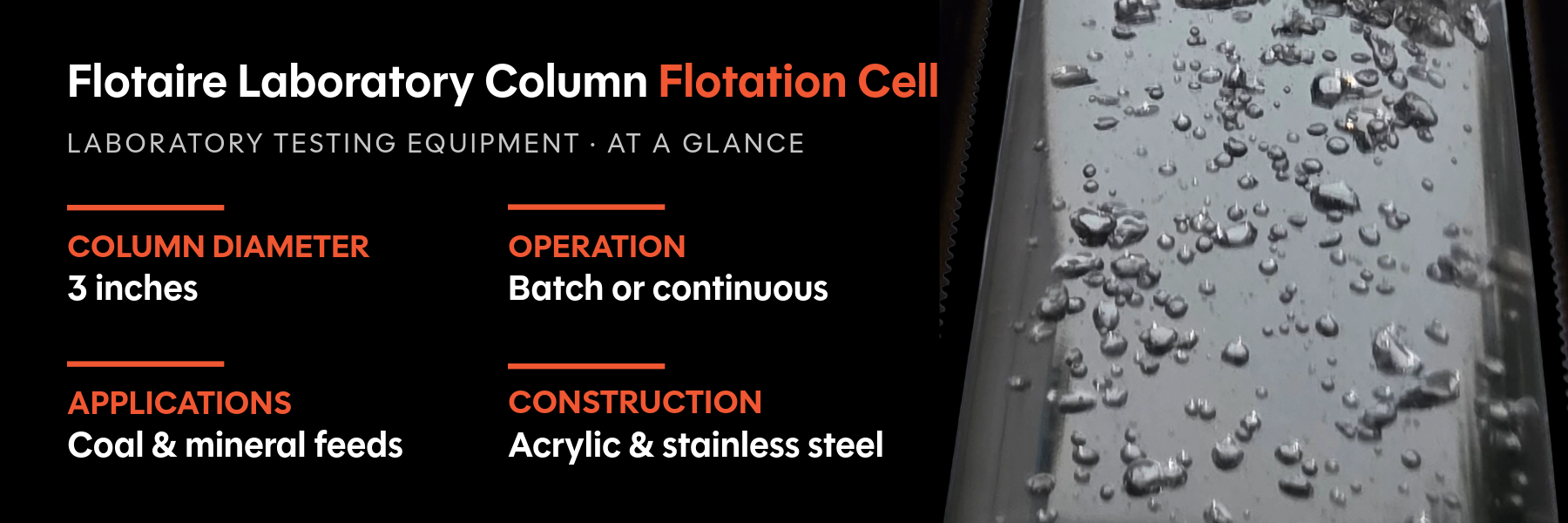
What the Flotaire is
The Flotaire is a lab-scale testing tool for coal and mineral feeds. The column runs three inches in diameter, operates in either batch or continuous mode, and is built from acrylic and stainless steel so it can handle a wide range of feed materials and chemistries.
Running a feed through the Flotaire shows how it reacts to the conditions that drive a separation: how finely the air is dispersed into bubbles, how much frother is added, how much wash water is applied, and where the pulp level sits. Those are the same levers an operator would adjust on a full-scale column, so the test reveals which combination actually works for that specific material rather than leaving it to be discovered later at scale.
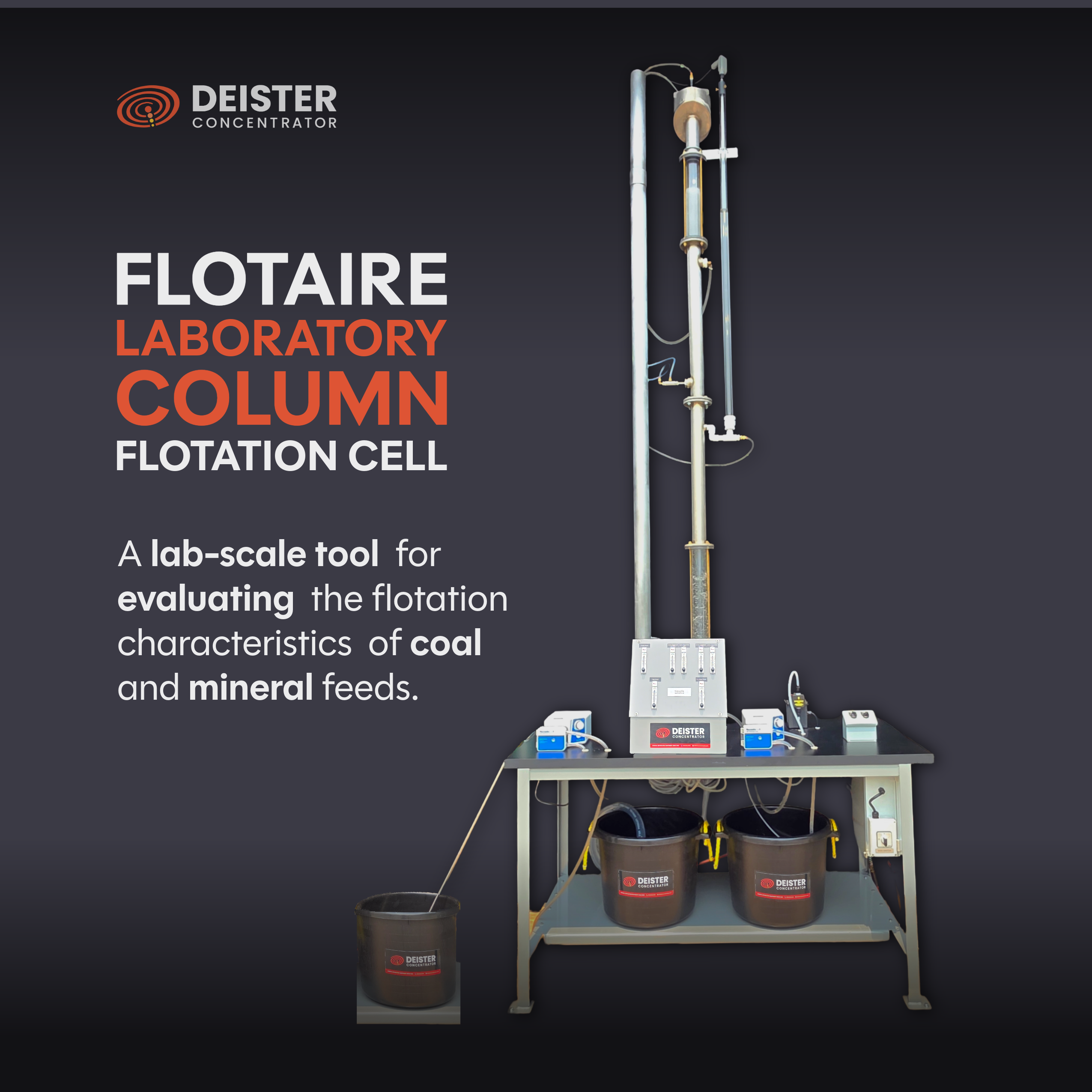
Flotaire at a glance.
Because the column is clear, an operator can watch the separation happen instead of waiting for the numbers afterward. Bubble behavior, froth formation, and how the feed carries or drops can be seen directly, which makes it possible to adjust conditions during a run rather than only between runs. Consistency is built into the equipment as well: automatic pulp level maintenance and metered reagent addition hold conditions steady, so the outcome reflects the feed and the chosen settings instead of run-to-run operator variation.
How the test works
A run moves through three stages: set the Flotaire up for the feed and the mode of operation, hold conditions consistent while the feed is processed, and then translate what the test shows into full-scale terms.
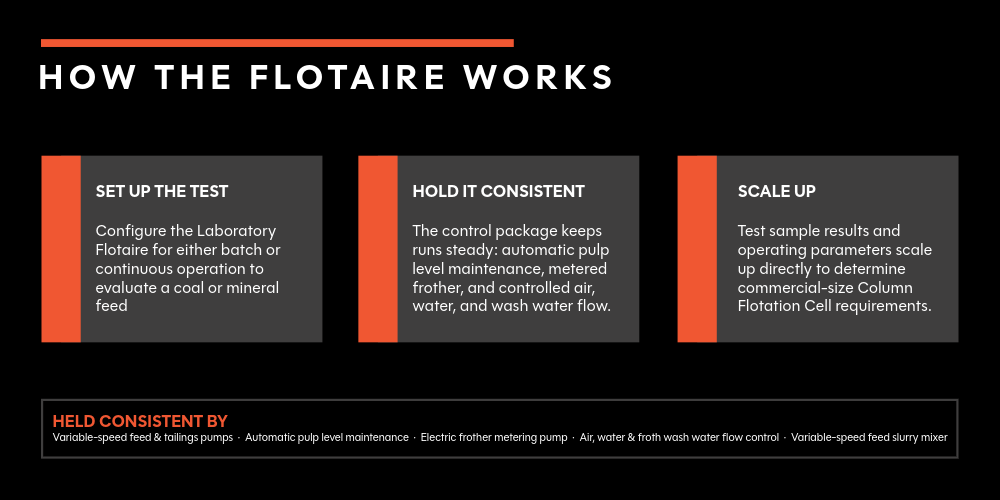
From lab bench to full scale
The reason a lab column earns its place is what happens after the test. Sample results and operating parameters from the Flotaire scale up directly to determine the requirements for a commercial-size Column Flotation Cell. The conditions that produced the best separation at three inches become the basis for sizing and specifying full-scale equipment.
For an operation weighing a flotation investment, that means the decision rests on measured data from its own feed, not on assumptions carried over from a different material or a supplier's generic example. The control package is what makes those numbers trustworthy: each subsystem holds one variable steady so the result can be attributed to the feed and the settings.
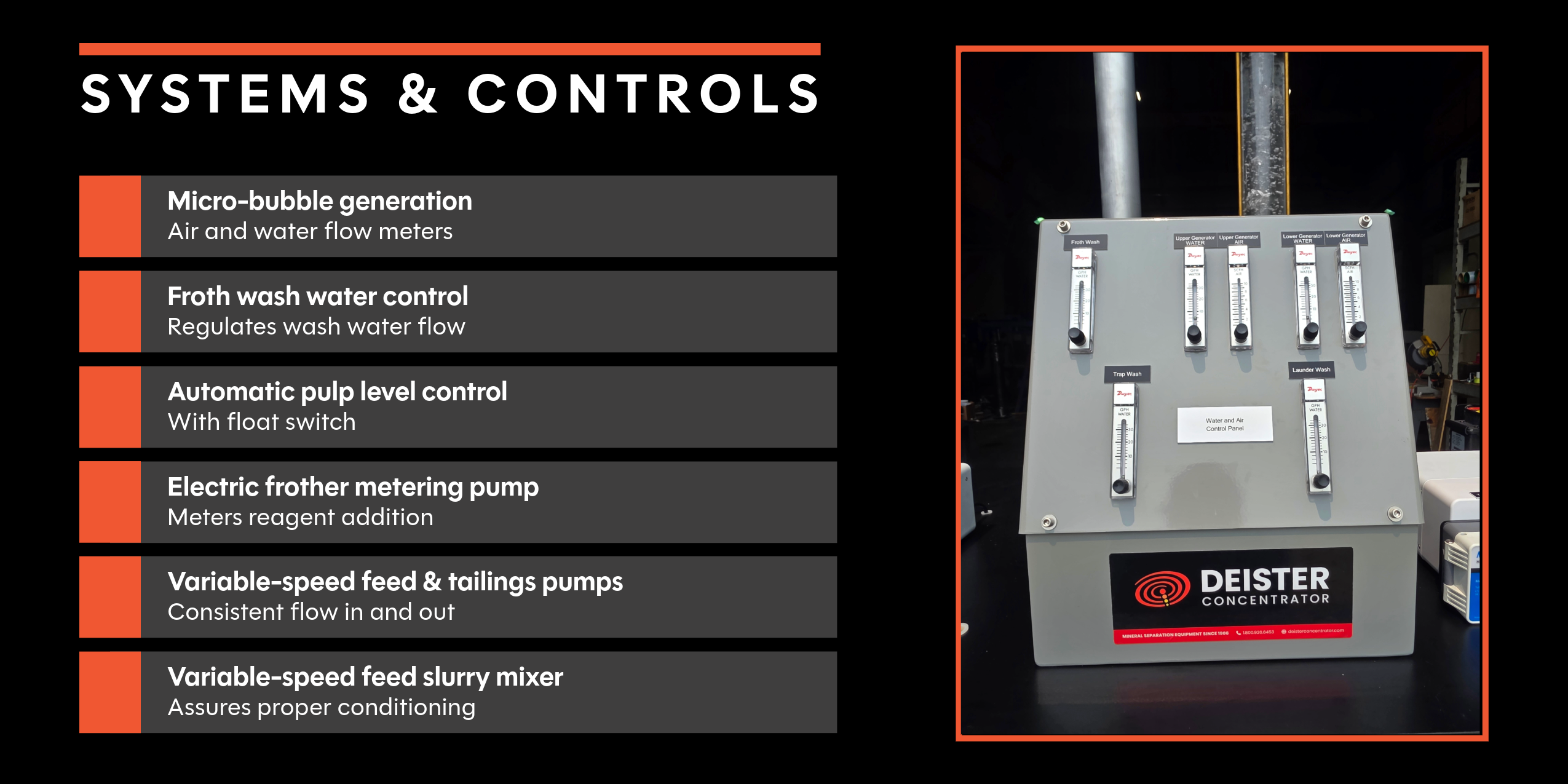
The Flotaire control package, built to keep every run consistent.
See how your feed performs
To evaluate a coal or mineral feed in the Flotaire Laboratory Column Flotation Cell, contact Deister Concentrator. Every unit is custom engineered and made in the USA.
Precision Separation. Proven Performance.